
"mild arabica"
4000 article(s) found

With mild, supple and balanced taste, introduction to Puerto Rico Coffee Bean Manor
The aroma is comparable to that of any other kind of coffee in the world. In the Yauco area, the coffee is owned and operated by local planters. The mountain climate here is mild, the plants have a long mature period (from October to February), and the soil is of high quality clay. Some old varieties of Arabica coffee beans are grown here, although the yield is lower than other varieties, but generally of high quality. this

Introduction of Puerto Rico Larez Coffee with mild climate and high quality clay
The aroma is comparable to that of any other kind of coffee in the world. In the Yauco area, the coffee is owned and operated by local planters. The mountain climate here is mild, the plants have a long mature period (from October to February), and the soil is of high quality clay. Some old varieties of Arabica coffee beans are grown here, although the yield is lower than other varieties, but generally of high quality. this

Description of Ugandan Coffee Flavor in mild and simple taste introduction of fine coffee varieties
Uganda is the country of origin of coffee grown in Robusta, but commercial cultivation of Arabica species here did not begin until early 1900. Today, there are still a large number of wild robusta coffee trees in Uganda, which is rare in cities in the world. As a landlocked country, the large coffee cultivation in Uganda is often interplanted, where coffee trees are mixed with food crops and rubber trees.

Simple and mild flavor of Ugandan coffee the characteristics of the manor producing area introduce the fine coffee beans of Uganda
Ugandan coffee beans have a unique flavor of delicate taste, which is very suitable for making Italian and other flavors of coffee. More importantly, Ugandan coffee beans are strictly screened according to the standards of the international market to ensure their high quality and pollution-free characteristics. Africa is the hometown of two major varieties of coffee, Arabica and Robusta, while the eastern Africa enjoys a plateau water hometown and a pearl of East Africa.

Robusta tastes so strong that some people even describe it as "oil barrel".
Professional coffee knowledge exchange more information on coffee beans Please follow the coffee workshop (official Wechat account cafe_style) Coffee farmers have always preferred Arabica coffee beans (arabica), which are mild in flavor and relatively expensive, while robusta, which is mostly used to make instant coffee or blended coffee, is less favored. A consultant in the boutique coffee industry

Introduction to the characteristics of mild and simple flavor description of Ugandan coffee
The characteristics of coffee, taste mild and simple, with a papaya flavor. Dry aroma (1-5): 3.2 wet aroma (1-5): 3.4 acidity (brightness) (1-10): 8 taste (stratification) (1-10): 8.5 taste (alcohol thickness) (1-5): 4 aftertaste (residue) (1-10): 8.1 balance (1-5): 0 basic score (50): 50 total score (maximum 10)

Simple and mild flavor description treatment of Ugandan coffee beans introduction to the taste of varieties
The characteristics of coffee, taste mild and simple, with a papaya flavor. Dry aroma (1-5): 3.2 wet aroma (1-5): 3.4 acidity (brightness) (1-10): 8 taste (stratification) (1-10): 8.5 taste (alcohol thickness) (1-5): 4 aftertaste (residue) (1-10): 8.1 balance (1-5): 0 basic score (50): 50 total score (maximum 10)

Mild climate Puerto Rican coffee flavor manor area introduces the characteristics of Puerto Rican coffee
It tastes long. This kind of coffee is very expensive and its flavor is comparable to that of any other coffee variety in the world. In the Yauco area, the coffee is owned and operated by local planters. The mountain climate here is mild, the plants have a long mature period (from October to February), and the soil is of high quality clay. Some old varieties of Arabica coffee beans are grown here, although the yield is higher.

Description of mild and simple Ugandan Coffee Flavor introduction to the characteristics of planting environment and taste of varieties
Mbale on the eastern side of Mount Elgon and other producing areas on the western side near the border of the Democratic Republic of the Congo have the export name Wugar. The official ranks are Oaganic (Organic), Bugisu AA, Bugisu A, Bugisu B, Bugisu PB, Wugar, Drugar and other unlisted grades. To find a good Ugandan coffee, you must first recognize BugisuAA and A.

Ecuadorian coffee brand recommends Ecuadorian coffee with balanced and mild taste.
Professional coffee knowledge exchange more coffee bean information please follow the coffee workshop (Wechat official account cafe_style) front street-Ecuadorian coffee introduction Ecuador's dense vegetation, rich species, coffee industry is growing year by year, especially the rapid growth of fine coffee. Bill Kabamba, which means the Holy Valley in the traditional Inca Quechua language. In this valley

Introduction of Indonesian Java Coffee with mild Flavor Flavor and Fine Coffee production area
Java coffee sold to Europe is a very special kind of coffee. At that time, it was shipped to Europe and the United States by sailboat, and the distance was long and the speed was slow, so it took a lot of time to transport. In this case, the coffee seems to have undergone a special fermentation and has a very unique taste. Later, when the ship replaced the sailboat, because the transportation time was shortened, what people drank was

Simple and mild Ugandan coffee grind taste variety characteristics of high-quality coffee beans
Uganda is the country of origin of coffee grown in Robusta, but commercial cultivation of Arabica species here did not begin until early 1900. Today, there are still a large number of wild robusta coffee trees in Uganda, which is rare in cities in the world. As a landlocked country, the large coffee cultivation in Uganda is often interplanted, where coffee trees are mixed with food crops and rubber trees.

Mild acid Costa Rica San Romano Estate Coffee Variety Origin Flavor Description Features
Coffee was introduced to Costa Rica from Cuba in 1729, and today its coffee industry is one of the most well-organized in the world, producing up to 1700 kilograms per hectare. Costa Rica has a population of 3.5 million, but coffee trees number 400 million, and coffee exports account for 25% of the country's total exports. The volcanic soils of Costa Rica are very fertile and well drained, especially in the central part.

A brief introduction to the Market Price of simple and mild Uganda Fine Coffee Bean varieties
The western branch of the East African Rift Valley runs through the western border, with many rivers and lakes at the bottom of the valley. Uganda has a great Victoria lake, coupled with the high mountains, which makes Uganda a mild climate suitable for growing coffee, although it spans both sides of the equator. The coffee growing industry in Uganda is one of the pillar industries of its exports. Uganda is the birthplace of Robsta in Africa, just as Ethiopia is the native source of Arabica coffee.

Mild flavor Costa Rican Yerzaro boutique coffee beans grind degree treatment method of baking degree
The coffee produced in Costa Rica is light and sweet in flavor and pleasant in flavor. The excellent Costa Rican coffee is called SHB. The coffee beans here have been carefully processed, and that is why there is high-quality coffee. Costa Rican coffee is full of Arabica beans, washed with water, its style is bright, fragrant, clear as wind chimes swaying in the breeze, and sour

Extremely mild aroma of Ugandan Java coffee beans introduce boutique coffee Elgon mountain area
Java produces only a small amount of Arabica beans, most of which were imported from Africa after the rust disaster. This coffee has a strong bitter taste after roasting, but the aroma is extremely light. Although the acidity is low and the taste is delicate, it is rarely used for direct drinking. It is often used to mix mixed coffee or to make instant coffee. Later, when the ship replaced the sailboat, due to the delivery time

Characteristics of Brazilian coffee beans Arabica coffee beans are suitable for hand-brewing coffee.
Following Cafe Review (Wechat official account vdailycom) found that Beautiful Cafe opened a small shop of its own Brazilian Coffee refers to coffee produced in Brazil. There is a wide variety of Brazilian coffee, the vast majority of which are unwashed and sun-dried, classified according to the name of the state of origin and the port of transport. Brazil has 27 states and 17 states produce coffee, but four of them produce the most coffee.

Burundi coffee is grown in war-torn areas but has a strong aroma and mild taste.
Professional coffee knowledge exchange more coffee bean information, please pay attention to coffee workshop (Weixin Official Accounts cafe_style) Burundi coffee from war-torn areas with strong aroma and soft taste. Burundi has one of the most diverse and successful coffee industries in the world, and it has its own characteristics. Coffee was introduced to the country by Belgian colonists in 1930 and is now only available in

Extremely mild flavor of Ugandan coffee beans the characteristics of the manor producing area introduce the fine products of Uganda
Later, when the ship replaced the sailboat, due to the shortened delivery time, people drank relatively fresh coffee beans. But people who are used to drinking Chen beans are not used to the fresh taste, so they desperately pursue old Java coffee, so that the Indonesian government and some businessmen deliberately store fresh beans in warehouses for one or two years and then sell them to consumers. In fact, compared with fresh beans, aged beans
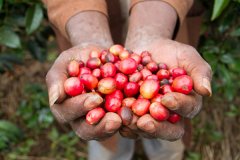
The difference between Arabica and Robusta Arabica and Robusta Coffee Beans
Arabica Coffee Beans Coffea arabica is known as Arabica coffee 70% of the worlds coffee production is from Arabica beans. Arabica coffee is grown in Central and North America, The Carribean, South America, Eastern Africa, Yemen, Papua New